Debunking Small Business Liability Insurance Myths

In my 15-plus years consulting with small business owners, I’ve heard it all when it comes to insurance. The most dangerous sentiment I encounter is the belief that a major liability event “won’t happen to me.” This thinking is often rooted in a series of pervasive, and costly, misunderstandings. These aren’t just academic errors; they are financial traps waiting to spring on the unprepared entrepreneur.
One of the most significant hurdles I’ve seen in the field is a fundamental disconnect between what owners think their policy covers and the stark reality written in the policy’s language. This article aims to bridge that gap. We will dissect the most common misconceptions about small business liability insurance, moving beyond dictionary definitions to explore how these policies function—and sometimes fail—in real-world scenarios.
We’ll tackle the myths that your business is too small, that one policy covers everything, and that your corporate structure is an impenetrable shield. By the end, you’ll have a practitioner’s understanding of liability risk and the tools to make smarter, safer decisions for your business’s future.
Myth 1: “My Business is Too Small to Need Liability Insurance”
This is perhaps the most frequent and perilous misconception I encounter. Many solo entrepreneurs or micro-business owners believe their small operational footprint makes them immune to significant legal action. This could not be further from the truth. In reality, smaller businesses are often more vulnerable because they lack the financial reserves to withstand a lawsuit.
A single claim, even a frivolous one, can trigger tens of thousands of dollars in legal defense costs alone. For a fledgling business, that’s often a death sentence. The scale of your business has no bearing on the potential for an accident to occur.
The Reality of “Slip-and-Fall” Lawsuits
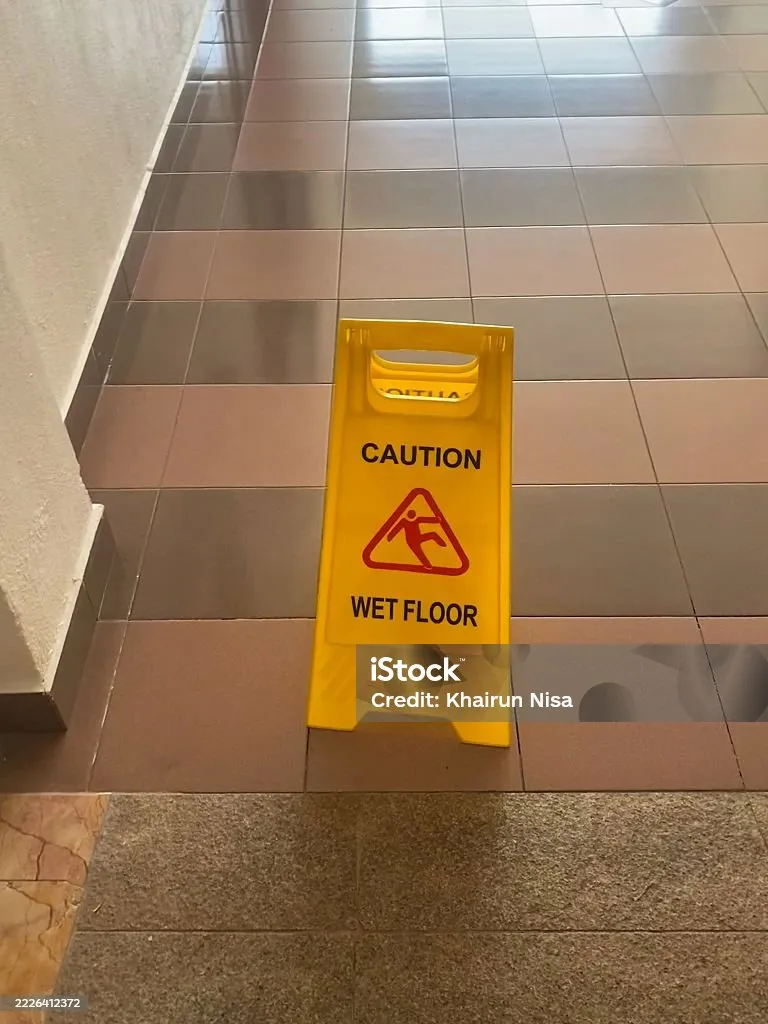
The classic example is the “slip-and-fall,” or a premises liability claim. A customer enters your shop, slips on a recently mopped floor, and breaks a wrist. It sounds simple, but the subsequent claim can involve medical bills, lost wages, and pain and suffering damages. Industry data from The Hartford indicates the average cost of such a claim is around $20,000.
In my experience, owners often assume goodwill or a simple apology will suffice. But we live in a litigious society. The existence of a Commercial General Liability (CGL) policy not only provides funds for a settlement but, more critically, covers the cost of a legal defense team to handle the claim from the outset. Your insurer manages the process, protecting you from the procedural complexities of the legal system.
How a Single Claim Can Bankrupt a Small Operation
I once consulted for a freelance graphic designer who held client meetings in his home office. A client tripped on a rug, fell, and sustained a serious concussion. Because he mistakenly believed his homeowner’s policy provided coverage (more on that later), he had no CGL policy. The resulting lawsuit, which sought damages for medical care and long-term cognitive issues, forced him to liquidate his business and personal assets to settle. This is a tragic, yet common, story.
A CGL policy is designed to absorb this kind of catastrophic financial shock. The insurer has a “duty to defend,” meaning they must defend you against any lawsuit that alleges damages covered by your policy, even if the suit is groundless. This defense is provided outside the policy limits in many standard ISO forms, meaning the legal fees don’t erode your coverage amount for the settlement itself.
Beyond Physical Premises: Liability in the Digital Age
Liability isn’t confined to physical spaces. Consider a caterer who posts a photo of a private event on social media without permission, leading to a privacy lawsuit. Or an online retailer whose product is alleged to have caused a minor injury. These are instances of advertising injury or products-completed operations liability, both of which are typically covered under a standard CGL policy.
In today’s market, your digital footprint is an extension of your business premises. Understanding your exposure in both the physical and virtual worlds is critical to appreciating the absolute necessity of liability coverage, regardless of size.
Myth 2: “A General Liability Policy Covers Absolutely Everything”
This is the flip side of the “too small” myth. Some business owners who do purchase a policy fall into a state of blissful ignorance, assuming their CGL policy is a magical shield against any and all potential claims. This is a dangerous assumption based on a misunderstanding of how insurance is structured.
A CGL policy is the bedrock of a business’s insurance portfolio, but it has very specific boundaries and, more importantly, a list of exclusions. Thinking of it as an “all-risk” policy is a setup for a major coverage gap. It’s crucial to understand what it’s not designed to do.
Understanding Policy Exclusions: What CGL Won’t Cover
Every insurance policy has an “Exclusions” section, and it’s the part I always urge clients to read first. Standard CGL policies explicitly exclude coverage for things like professional errors, employee injuries, auto accidents, and cyber data breaches.
For example, if you’re a marketing consultant and a typo in your ad copy causes a client to lose a major contract, your CGL policy will not cover their lawsuit against you for that financial loss. That’s a professional error, not an instance of bodily injury or property damage. For a deeper dive into what is and isn’t included, you can review a detailed guide on Breaking Down CGL Policy Components: What Does General Liability Insurance Cover?.
The Critical Role of Professional Liability (E&O) Insurance
The scenario with the marketing consultant highlights the need for a separate Professional Liability policy, also known as Errors & Omissions (E&O) insurance. This covers claims of negligence, misrepresentation, or mistakes made in your professional services.
Anyone who provides advice or a service—consultants, architects, accountants, IT professionals, real estate agents—needs E&O coverage. A CGL policy covers the consequences of your physical actions (e.g., you spill coffee on a client’s server, causing property damage), while an E&O policy covers the consequences of your advice or professional work (e.g., your code has a bug that crashes the client’s system, causing financial loss).
Author’s Expert Note: I’m seeing a trend where clients increasingly demand proof of E&O insurance before signing a contract. Lacking this coverage is not just a financial risk; it’s becoming a barrier to entry for winning larger projects. The expectation of professional accountability is higher than ever.
Why You Need Separate Policies for Cyber and Auto Liability
Two other massive exclusions in a CGL policy are commercial auto use and data breaches. If you or an employee gets into an accident while driving for business purposes (even in a personal vehicle), your CGL provides no coverage. You need a dedicated Commercial Auto policy.
Similarly, if your customer database is hacked and sensitive information is stolen, the costs of credit monitoring, public relations, and regulatory fines are not covered by CGL. This requires a Cyber Liability policy. As business operations become more complex, it’s vital to think about your risk in layers. Just as a modern home needs a robust security system, as detailed in The Ultimate Guide to Building an Energy-Efficient Smart Home Ecosystem in 2026, a modern business needs a multi-faceted liability framework to be truly secure.
Warning/Caution: Relying on a CGL policy to cover digital risks is one of the biggest pitfalls for small businesses today. The cost of a data breach can easily exceed six figures, and your CGL carrier will deny that claim without a moment’s hesitation.
Myth 3: “My Homeowner’s Insurance Protects My Home-Based Business”
With the rise of remote work and home-based businesses, this misconception has become incredibly common. The logic seems sound: if the business is in the home, the home’s insurance should cover it. Unfortunately, insurance carriers see it very differently.
Standard homeowner’s policies are designed and priced for residential risk, not commercial risk. They contain specific language to exclude or severely limit coverage for business-related activities. Relying on one is like trying to fit a square peg in a round hole.

The Homeowner’s Policy Business Activity Exclusion Clause
If you pull out a standard HO-3 homeowner’s policy, you will find a section that explicitly excludes liability “arising out of or in connection with a ‘business’ engaged in by an ‘insured’.” The definition of ‘business’ is typically very broad, including any full or part-time trade, profession, or occupation.
This means if a client visiting your home office trips and falls, or a courier delivering a business package gets injured on your property, your homeowner’s insurance carrier has the right to deny the claim because the injury was related to your business activities.
When a Business Rider Isn’t Enough
Some insurers offer a “rider” or “endorsement” to a homeowner’s policy for a small home-based business. While better than nothing, these endorsements are often extremely limited. In my consulting, I’ve seen them provide as little as $2,500 in liability coverage, which is woefully inadequate.
These riders are typically designed for very low-risk, incidental businesses, like a hobbyist who sells a few items on Etsy. They are not sufficient for businesses that have clients visiting the home, handle valuable client property, or generate significant revenue. A separate, stand-alone CGL policy is the only way to get true commercial-grade protection.
Myth 4: “I’m an LLC, So My Personal Assets Are Safe”
The idea that forming an LLC or S-Corp creates an invincible wall between business and personal assets is a fundamental misunderstanding of corporate law. While a corporate structure provides a significant layer of protection—the “corporate veil”—it is not absolute. This veil can be pierced.
Liability insurance and a proper legal structure are not mutually exclusive choices; they are two pillars of a comprehensive asset protection strategy. One protects the business’s assets, and the other helps protect the corporate veil itself.
Piercing the Corporate Veil: How It Happens
Courts can “pierce the corporate veil” and hold owners personally liable if the business entity is not maintained as a truly separate entity. This can happen if you co-mingle personal and business funds, fail to keep proper corporate records, or personally commit a negligent act.
For example, if you, the business owner, personally cause an injury through your own negligence (e.g., you improperly install a shelf in your store and it falls on a customer), a lawsuit can name both the LLC *and* you as an individual. If you are found personally negligent, your personal assets are at risk.
The True Purpose of an LLC vs. Liability Insurance
Think of it this way: An LLC is designed to protect you from the business’s debts and the actions of your employees. Liability insurance is designed to protect the business’s assets from claims of negligence. When a claim arises, the insurance policy pays for the lawyers and the settlement. This prevents the lawsuit from depleting the company’s bank account and threatening its solvency.
Without insurance, even if the LLC protects your personal home, a major lawsuit could drain the business of all its cash, forcing it to close. The insurance is what keeps the business alive to fight another day.
CGL vs. Other Liability Policies: A Head-to-Head Comparison
To clear up the confusion, it’s helpful to see the primary types of liability coverage side-by-side. I’ve found that visualizing the distinct roles each policy plays is the quickest way for business owners to grasp their unique value.
| Policy Type | Primary Coverage | Best For | Common Exclusions |
|---|---|---|---|
| Commercial General Liability (CGL) | Third-party bodily injury, property damage, advertising injury. | Nearly all businesses, especially those with a physical location or customer interaction. | Professional errors, auto accidents, employee injuries, data breaches. |
| Professional Liability (E&O) | Negligence, errors, and omissions in professional services that cause financial harm. | Consultants, accountants, architects, IT professionals, real estate agents. | Bodily injury, property damage, intentional wrongdoing, employment disputes. |
| Cyber Liability | Data breaches, network security failure, privacy violations, and associated costs. | Any business that stores customer data, processes payments, or operates online. | Property damage, future lost profits, improvements to internal tech systems. |
| Commercial Auto | Liability and physical damage for vehicles used for business purposes. | Businesses with company vehicles or employees who drive for work. | Use of non-owned vehicles (unless specifically endorsed), intentional acts. |
Author’s Expert Note: Notice how the coverage areas are designed to dovetail, not overlap. An effective risk management strategy involves identifying which of these exposures your business has and layering the appropriate coverages. Expect to see more hybrid policies emerge, but for now, understanding the future of business liability means mastering these distinct pillars of protection.
Expert Tips for Navigating Your Liability Insurance Needs
After years of seeing business owners make the same preventable mistakes, I’ve compiled a list of core practices that can save you immense stress and money. These are not just tips; they are operational disciplines.
- Conduct an Annual Risk Review: Your business is not static, and neither is your risk. Sit down with your insurance broker every year before renewal to discuss changes in your operations, revenue, payroll, and services. A business that adds a new service may have just created a new, uninsured liability exposure.
- Understand Occurrence vs. Claims-Made Policies: This is a technical but critical distinction. Most CGL policies are “occurrence-based,” meaning they cover an incident that occurs during the policy period, regardless of when the claim is filed. Many E&O policies are “claims-made,” meaning the policy must be active when the claim is reported. If you cancel a claims-made policy, you may need to buy “tail coverage” to protect against past work.
- Document Everything: In the event of a claim, documentation is your best friend. For a slip-and-fall, this means incident reports, photos, and witness statements. For a professional liability claim, it means having a clear, signed contract and a record of all client communications.
- Read the Exclusions First: As I mentioned earlier, always start with what your policy doesn’t cover. This is the fastest way to identify gaps in your protection and determine if you need additional, specialized policies like Cyber or Professional Liability.
- Don’t Set Your Limits Too Low: Buying the minimum required limit to satisfy a contract or lease might feel like saving money, but it can be a costly error. A $1 million liability limit can be exhausted surprisingly quickly in a serious lawsuit. Analyze your worst-case scenario and insure for it.
Frequently Asked Questions about Common Misconceptions About Small Business Liability Insurance
Is general liability insurance legally required for a small business?
In most cases, it is not legally mandated by state or federal law. However, it is often required contractually by landlords, clients, and licensing boards, making it a practical necessity for doing business.
Does general liability cover my products if they are defective?
Yes, this is typically covered under “products-completed operations” coverage within a CGL policy. It protects against bodily injury or property damage caused by your product after it has been sold and is out of your possession.
Will my CGL policy cover me if an employee sues me?
No. Lawsuits from employees are explicitly excluded from CGL policies. You need a separate Employment Practices Liability Insurance (EPLI) policy to cover claims like wrongful termination, discrimination, or harassment.
What is the difference between general liability and a Business Owner’s Policy (BOP)?
A BOP is a package deal that bundles General Liability with Commercial Property insurance and often Business Interruption insurance. It’s a convenient and often cost-effective option for small businesses that own property or equipment.
Does liability insurance cover independent contractors?
It depends. Your policy covers your liability for the work they do on your behalf, but it does not cover their own negligence. It is a best practice to require that all contractors you hire provide you with a certificate of their own liability insurance.
Can I get sued personally if my business has liability insurance?
Yes, you can still be named personally in a lawsuit. However, if the lawsuit is related to the business’s operations and you haven’t been grossly negligent, your CGL policy’s “duty to defend” will typically extend to you as the business owner.
Does liability insurance cover deliberate or fraudulent acts?
No. Insurance is designed for accidents and negligence. Intentional acts, criminal behavior, and fraud are always excluded from coverage. Committing fraud and expecting your insurer to pay is a non-starter.
How much does small business liability insurance cost?
The cost varies widely based on your industry, revenue, location, and claims history. A low-risk consultant might pay a few hundred dollars a year, while a construction contractor could pay many thousands. The average is typically between $400 and $1,200 annually.
Conclusion
Navigating the world of business insurance can feel like learning a new language, one filled with exclusions, endorsements, and legalese. However, succumbing to the common misconceptions about small business liability insurance is a risk that no entrepreneur can afford. Believing you’re too small, fully covered by one policy, or invincible behind an LLC are errors that can unravel years of hard work in an instant. The reality is that strategic liability coverage is not an expense; it is a fundamental investment in your business’s resilience and longevity.
The key takeaway is to approach your insurance with proactive curiosity. Ask your broker tough questions, read the exclusion sections of your policies, and conduct an annual review of your evolving risks. By replacing myths with a clear-eyed understanding of how liability works, you empower yourself to build a stronger, more secure foundation for the future of your business. Don’t wait for a claim to become your first lesson in risk management.
“`
Originally posted 2026-05-05 16:14:23.