Sony a7R VI vs. a1 II: The Best Sony Camera Isn’t the Most Expensive
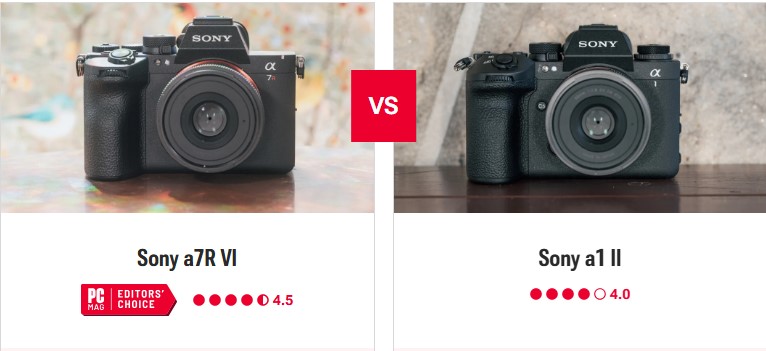
Sony’s a7R VI conveys nearly everything that makes the a1 II extraordinary, but at a cost that’s distant simpler to legitimize. I’ve tried both cameras broadly and break down the key contrasts in execution, highlights, and esteem to offer assistance you choose which Sony lead is really worth your money.
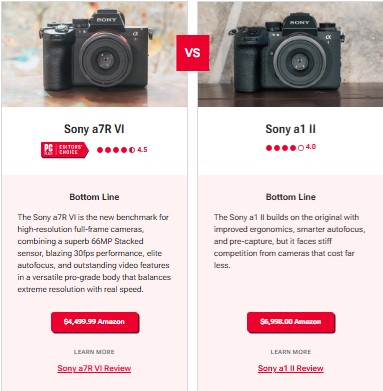
Sony is making a huge sprinkle with the most recent adaptation of its high-resolution mirrorless camera, the a7R VI. The 7R arrangement has continuously been around pixel count—the R stands for resolution—but the overhauls in the 6th era are more almost the sensor speed. Its 66MP Stacked CMOS chip includes bolster for 30fps nonstop drive, furthermore up to 8K30 and 4K120 video recording. It’s a level of execution that Sony has already saved for its lead a1 II, a 50MP Stacked CMOS camera that costs around $7,000. The a7R VI isn’t cheap, but at $4,500, it’s an less demanding pill for genuine specialists to swallow, and it can cut overhead costs for working pros.
The a1 II does a few things that the a7R VI doesn’t, and it has a few additional buttons and dials—but is that sufficient to legitimize its premium cost in today’s advertise, particularly since you might get an extraordinary focal point for the cash you’ll spare with the a7R VI? After investing time shooting with both models, it’s clear Sony’s two lead mirrorless cameras target exceptionally distinctive buyers—and the crevice between them is a parcel littler than their costs suggest.
Photo Quality: The a7R VI Gives More Room to Crop
The a1 II and a7R VI both utilize full-frame Stacked CMOS sensors, a sort of chip that layers Measure memory behind the photo-sensitive surface to radically abbreviate the time it takes the camera to filter all the pixels. The a7R VI presses more pixels into its chip, 66MP versus 50MP for the a1 II, which implies that its filter speed is a little bit slower, but not sufficient to make a distinction for most scenes. The a7R VI conveys more pixels without making any trade-offs in picture quality—its ISO 50-102400 run and 8.5-stop stabilization framework matches the a1 II, and the a7R VI’s sensor guarantees more energetic extend as well: 16 stops versus 15 for the a1 II, so its Crude records give a small more breathing space for presentation edits.
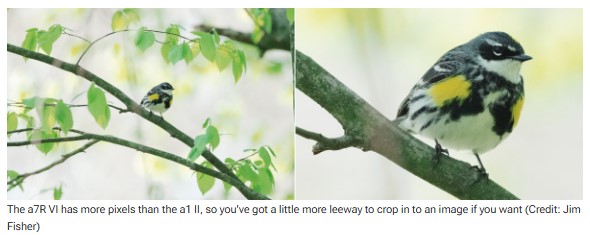
You won’t continuously require 66MP, but the additional room to trim photographs is welcome, and it’s sufficient for me to say the a7R VI beats the a1 II in photo quality.
Winner: a7R VI
Autofocus and Following: Both Back 30fps at Full Crude Quality
The a7R VI has a exceptionally slight edge in autofocus execution, as its subject acknowledgment and following framework can recognize marginally littler objects than the a1 II’s, but I’m still calling this category a tie. Both cameras have amazingly sticky following frameworks that center on the eyes of individuals, natural life, pets, and creepy crawlies, as well as lifeless subjects like trains, planes, automobiles, and motorbikes.
Both cameras fire off 14-bit Crude photographs at up to 30fps, incorporate a precapture buffer mode, and a speed boost work. Speed boost lets you utilize a slower outline rate and slope up to 30fps with a button press—so distant it’s select to Sony and is a convenient way to take advantage of ultra-fast capture speeds when you require them, and spare room on your memory card when you don’t.
Winner: Tie
Buffer: The a1 II Goes for Longer Terms at 30fps
Both the a1 II and a7R VI back 30fps photography with 14-bit Crude quality, but the a1 II’s littler records and more profound buffer offer assistance capture more photographs in a burst some time recently the camera moderates down. With CFe memory, the a1 II goes for minutes, and with SDXC it gets 80 photographs in a burst, whereas the a7R VI gets around 70 Lossless Compressed Crude pictures in a burst. For JPGs, the a1 II lets you shake off as numerous shots as you need without a lull, whereas the a7R VI gets around 215 with CFe and 150 with SDXC. If you make magnanimous utilize of the screen button and beat 30fps drive rate, the a1 II is a more grounded entertainer, in spite of the fact that to be reasonable, I didn’t run into any buffer issues amid real-world utilize with the a7R VI.
Winner: a1 II
Video: 8K30 and 4K120 With No Crop
The a1 II and a7R VI are on flawlessly indeed balance for video. Both utilize H.265 compression and record at up to 8K30 and 4K120 with 10-bit color, and bolster a slew of picture profiles, counting ready-to-share looks like S-Cinetone, level S-Log3, and HDR HLG. The a1 II’s sensor peruses out a bit quicker, so it appears less rolling screen when recording fast-moving activity, but it’s not sufficient of a contrast to alter how most scenes look.
Winner: Tie
Controls: The a1 II Has More Buttons, But No Backlights
The a1 II incorporates a few controls that aren’t on the a7R VI. Particularly, it has a configurable C5 button on the front following to the hold that locks in the speed boost work by default, also a dial on the beat plate that changes between drive modes. The a7R VI moreover has speed boost, but you’ll require to outline it to another button, and it makes you plunge into an on-screen menu to switch drive modes. On the other hand, most of the a7R VI’s raise buttons are illuminated, which is a win for occasion picture takers working in dim situations and for astrophotographers.
I’m calling this category a tie. If you regularly photo sports and natural life, the a1 II’s C5 button and drive dial are both convenient, whereas makers who frequently work in dim light will appreciate the a7R VI’s illuminated controls.
Winner: Tie
Displays: The a7R VI’s Viewfinder Is Incomprehensible to Beat
Both the a1 II and a7R VI have huge, sharp OLED viewfinders with 0.90x amplification, 9.44 million specks of determination, and selectable 60/120fps revive rates. Also, they utilize an indistinguishable (3.2-inch, 2.1 million specks) raise show with double hinges.
The EVF specs are comparable, but the a7R VI’s viewfinder offers higher top brightness, 10-bit color for full DCI-P3 propagation, 125% sRGB extent scope, and appropriate HDR checking. The a7R VI moreover conveys full-quality pictures at 120fps, whereas the a1 II is milder at 120fps than at 60fps. Both viewfinders are phenomenal, but the a7R VI’s more extensive color extent and full-quality 120fps nourish deliver it a win.
Winner: a7R VI
Connectivity: The a1 II’s Ethernet is a Contrast Producer for Some
Both the a1 II and a7R VI have Bluetooth and Wi-Fi, combine with the Sony Creators’ smartphone app (accessible for Android and iOS), and back uploading to an FTP server. The a1 II goes one step advance and includes a Gigabit Ethernet harbour, which is great news for masters who cover professional sports and huge news occasions in settings with spotty Wi-Fi and require to send pictures to an editor for quick distribution. It’s as it were a distinction creator for a select few clients, but if you depend on a wired association for work, the a1 II beats the a7R VI.
Winner: a1 II
Flash Adjust: Quicker With the a1 II
Both the a1 II and a7R VI utilize fast-reading Stacked CMOS sensors, but the a1 II is a small speedier to filter its pixels, so it’s able to adjust with flashes with a completely electronic screen at 1/200-second, and oversees 1/400-sync with its mechanical central plane screen. The a7R VI bolsters 1/250-second match up with its mechanical screen, but does not back streak photography with its electronic shade. A speedier match up speed makes it simpler to utilize fill streak in shinning daylight and with wide-aperture focal points, and the a1 II’s 1/400-second adjust speed is a standout among full-frame cameras.
Winner: a1 II
Battery Life: The a7R VI Goes the Separate Between Charges
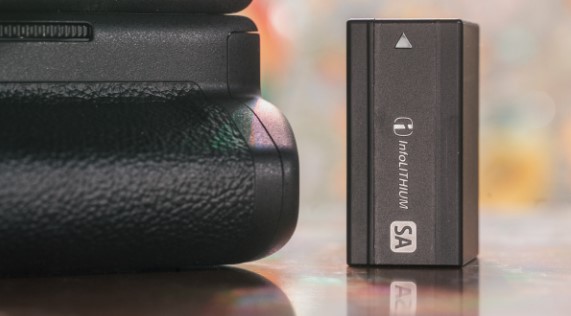
The a7R VI presents a modern NP-SA100 battery that records 600 EVF/710 LCD exposures utilizing the CIPA test, bolsters quick charging, and incorporates shrewd highlights to report on battery wellbeing in-camera.
The a1 II employments the long-running NP-FZ100, which is appraised for 420 EVF/520 LCD exposures and doesn’t back wellbeing announcing or quick charging. Makers who have built up a heap of NP-FZ100 batteries over the a long time may balk at changing to a unused framework, but the NP-SA100 is the way better option.
Winner: a7R VI
Price: Spare a Bundle With the a7R VI
There’s no challenge here—the a7R VI costs around $4,500 as a body as it were, versus $7,000 for the a1 II. That’s sufficient investment funds to choose up a top-tier focal point like the FE 24-70mm GM II and still have a few cash in your pocket.
Winner: a7R VI
And The Winner Is…
Sony a7R VI
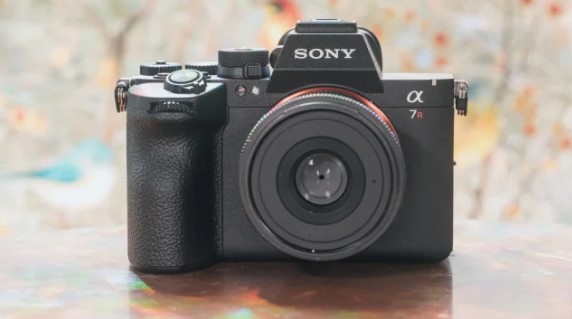
The a7R VI beats or matches the a1 II in sufficient categories to make it the clear victor for makers who need a quick, high-resolution camera that exceeds expectations for both imaging and video—it’s as great or way better than the a1 II where it checks, and costs a hell of a parcel less. Stars who cover live occasions and breaking news where Ethernet network is a must-have will incline toward the a1 II, but if you do not live in that specialty, the a7R VI beats the a1 II in execution and esteem.
Originally posted 2026-05-26 07:16:37.